World Cup Day 6: Cabo Verde & The Day Of Draws

World Cup Day 5 delivered a quartet of draws, each of which was fascinating in isolation.
Collectively, the four mean that groups G and H are a wide open affairs going into Matchday 2; with one of the presumptive challengers for the World Cup trophy in Group H and Group G featuring its own European power mixed in with lesser-regarded nations, a winner-less Monday means the natural order is somewhat upended.
But the World Cup is much more than a series of games meant to deliver a champion. It's an examination of our connections as humans who share this particular spinning ball of dirt expressed through the greatest sport man has ever created. The game is laid over the rocky strata of commerce, immigration, politics, war, and is both a reflection of our current moment and a means by which to understand it.
Monday's opening match pitted the champions of Europe and one of the pre-tournament favorites, Spain, against Cabo Verde, a tiny island nation that rather anonymously sits at the intersection of so much of the history that shaped the modern world.
Cabo Verde's archipelago of ten volcanic islands, nine of which are inhabited, is perfectly located to serve as supply stop on the journey between the coast of Africa and the Caribbean. Beginning in the 15th century, Cabo Verde became a booming part of the transatlantic slave trade. For 300 years, the economic prosperity of people on the island depended on the Portuguese and others passing through with captured human beings on their way to the Americas.
The Portuguese systematically exploited the island and its people during these times, stripping the land of natural resources and robbing the people of anything of value—down to the pots the islanders used to cook their food. The island went through a dramatic decline when slavery ended, then entered the 20th century under the thumb of Portuguese colonial masters.
As recently as the 1970s, Portugal forced Cape Verdeans to emigrate to other Portuguese colonial holdings to work on plantations. The amount of outward emigration from the islands, combined with the deaths of thousands due to multiple famines, dropped the population for the country to less than 200,000 by 1950.
Today the population is near 500,000. The Cape Verderan diaspora in the United States, especially in places like southern Massachusetts and Rhode Island, is close to 200,000. It wouldn't be wrong to say that last few decades have been a modest Cape Verdean Renaissance.
It seems to important to point out that the identity of Cape Verdeans is a cultural, not ethnic, one. As a crossroads of sea trade across the entire colonial period set off the coast of Africa, the ethnic character of Cape Verde doesn't fit into a neat box. Cape Verdeans are Africans by most definitions, but like an island I know very well, Puerto Rico, it makes no sense to try and define the people of the island by a metric that can't capture their complexity.
You might be able to tell that I love this stuff. The World Cup is so much more than soccer and using it as an excuse to learn about Cape Verde is significant part of why I adore it so much.
Last month I visited Rhode Island for one of our Morning Kickaround live shows. The tourism council of Blackstone Valley, a region that includes all of northern Rhode Island including Pawtucket, brought us there to see some of the soccer history of the region ahead of the American World Cup.
As much as I enjoyed learning bout the Pawtucket Free Wanderers and stepping onto the grass at the site of the first-ever US Open Cup final, I was more enchanted by our visit to the local Cape Verdean museum and our chats with the very proud people who keep it going.
These are men and women who keep the connections to the old country alive while at the same living fully as proud Americans. They make our country better and I can only imagine the joy they felt when the soccer team representing the islands of their forebears held mighty Spain to a draw in Atlanta.
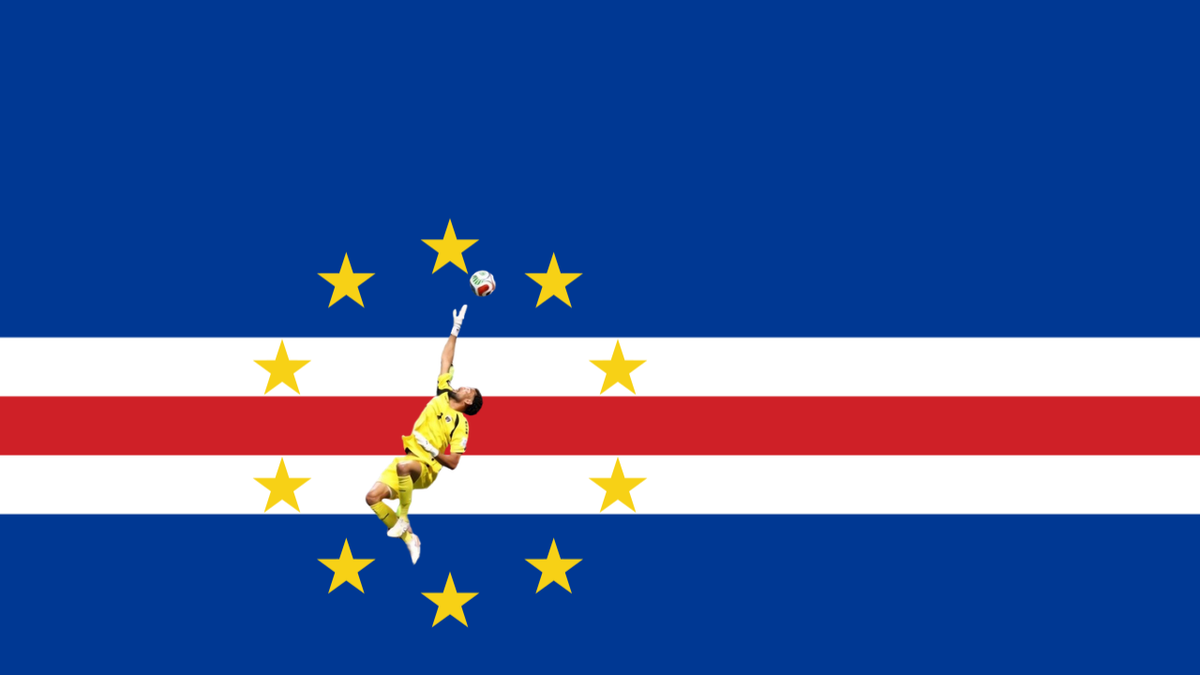
Hail Vozinha. Hail a team that defended like lions for 90 minutes and committed exactly one foul. One.
The last game of the night was always going to be more fraught in its energy and complicated in its drama. With all apologies to a New Zealand team that delivered one of its best-ever World Cup performances in Los Angeles, last night was about Iran.
You don't need a history lesson from me on Persia, Iran, or the American relationship to the latter. The current moment is ugly and painful and sat like a lead weight on the proceedings at SoFi Stadium on Monday. A stadium full of proud Persian people, many of them waving a flag banned by FIFA, moaned and roared with every moment in a show of love for home and identity intentionally meant as a rebuke of the government in charge of that homeland.
And then there were the Iranian players, asked to play their best and bring glory to Iran, the Iranian people–and per the thousands and thousands in LA—the Iranian diaspora, all the while being pawns in an insipid war that is doomed to deliver only suffering for both sides.
It took five hours for the Iranian team to get to Los Angeles from Tijuana, the nation's impromptu World Cup base camp after it was forced to abandon a plan for Arizona. Iranian players went to extra pains after the match to express their frustration over their treatment by the US government. A team that did not get the same opportunity to play, train, and prepare properly before the tournament nevertheless did themselves proud with an excellent display of soccer in a comeback draw.
I tip my hat to them. They were justified in their postgame frustrations about their treament.
As for the rest—the divisions within the Iranian support in LA, the further implications the nation's participation the tournament could have, and what a supposed end to Iranian-American hostilities might mean, I'll leave that to others.
In this house we read Alexander Abnos on Iran.
As for today, France enters the arena against a tricky Senegal team that will be primed to give one of the tournament favorites a surprise for footballing reasons and the nation of France a surprise for...other ones. Like colonialism, for example. Tell me if you've heard that before.
Don't worry, no more history. For now.
Iraq is going to cede possession to Norway, which puts the impetus on Martin Odegaard and company to break down the Lions of Mesopotamia (best nickname in the tournament). Everyone is anxious to see what Erling Haaland can do on the international stage and it will be nice to seem him play and not just pop up in every third commercial.
And oh yeah, Argentina. Algeria has a bit of attacking talent—Riyad Mahrez and Leverkusen kid Ibrahim Maza suit up for The Fennecs, but the match in Kansas City is mostly about getting a look at a slightly older Albiceleste as they chase the impossible—back-to-back World Cup titles.
To get ready for that game, don't read a tactical breakdown. Read this incredible piece by Jonathan Wilson on the math teacher who taught both Enzo Fernández and Julián Álvarez as kids.
PROGRAMMING NOTES
I'm back on the radio tonight with Eric Wynalda at 9 PM ET on SiriusXM FC. We'll be on the air live at kickoff of Argentina v. Algeria and will have all the live check-ins you need to follow the game.
As a quick aside about what's happening on SiriusXM FC: As a lover of sportstalk radio, I'm glad we're there to give people a place to not just hear the games, but to dive deeper into them and the stories around the tournament in an interactive, immediate way. You should check it out. We even got free trials.
Oh, and we got Ray Hudson out of retirement to record our intro and it is INCREDIBLE. Have a listen. Ray is the best.
I'm lining up Ryan Rosenblatt, who is himself doing an incredible daily newsletter run during the tournament, to talk about the World Cup and the USMNT for a Wednesday night edition of The Best Soccer Show. Watch live if you can (hit subscribe to get notified when we're live), or get the show via podcast immediately after we finish.
Here's one more plea: If you're reading this, please subscribe and share the newsletter. Thanks.
See you tomorrow.