World Cup Day 27: The Best We Ever Were

Full disclosure: My brain is not 100% fit.
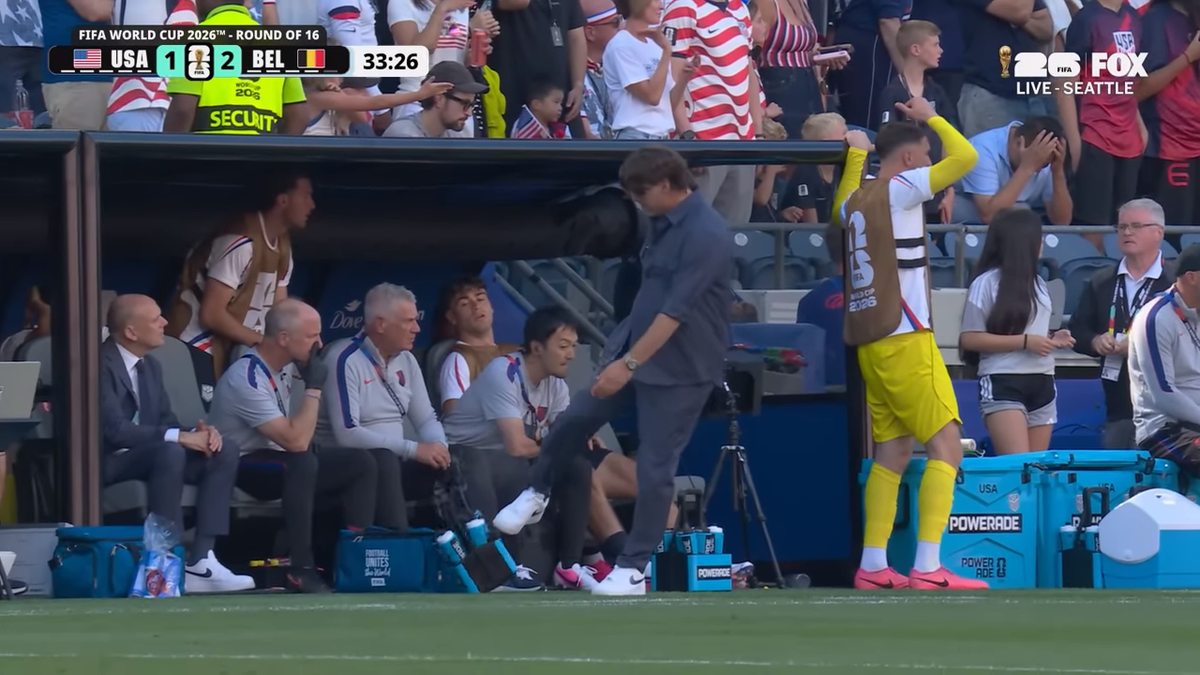
That's mostly because I was up until 1 AM hosting the postgame show for the USMNT debacle against Belgium on SiriusXM FC with Eric Wynalda on Monday night. As you can imagine (if you didn't listen), the phone lines stayed blazing hot for three hours with grief, anger, resignation, and the other usual emotions that spews forth when a team people care desperately about fails on the biggest stage.
People were going through it.
There were times during those three hours, either because of delirium caused by fatigue or because of my own staggering disappointment in the performance that I full exited my body. My consciousness floated outside of my corporal being and I watched as I executed the task of guiding and commenting in a manner so similar to a raft of shows I've done in my broadcasting past that it felt like it was scripted.
American soccer's coping mechanisms are like the grooves worn by oxen as they turn the mill shaft. This analogy has the added bonus of evoking images of going around in circles, something plenty of the most cynical among us would say we're doing, but it's really the grooves I want to talk about.
First, a few words on the emotional relationship American soccer fans have to our men's national team. It's weird, it's complicated, and there aren't too many similar fan-national team relationships among the world's foremost soccer-playing nations.
Because soccer isn't our most important national sports obsession (the NFL) or the sport we with the most cultural history (baseball), or, like both of those, a game we created and built into a professional spectator enterprise, we're at a loss as how to feel about our place in the hierarchy in the world of men's soccer.
A USMNT failure is much more than our favorite sportsball playing outfit coming up short of the goal of winning a championship. For American soccer fans, USMNT failures are a reflection on the state of the sport in the United States. When the phone lines lit up on last night's episode of WTF on SiriusXM, most of them lit up with soccer fans anxious to talk about pay-to-play, promotion & relegation, coaching approaches for youth players, and other things that had no bearing whatsoever on the events in Seattle. Those are those well-worn grooves.
A win against Belgium wouldn't have meant all of those most screamed about "problems" were fixed, but I'm certain no one would have brought them up if the USMNT had squeaked by 1-0. Funny how that works.
I posted this during the show as an offhand thought, but the more I think about it, the more I think it makes sense as a way to understand the reaction to failures like Monday night's:
It's striking me how much the way USMNT fans try to understand why one game went badly by screaming about giant structural and cultural problems is of a kind with conspiracy thinking. It's not imagining conspiracy, but it is going to a macro complicated explanation rather than a micro simple one.
— Jason Davis (@davisjason.bsky.social) July 6, 2026 at 11:16 PM
We want our national team to validate us and make us look good in front of the cool kids. During the World Cup that includes not only the usual group of judgy foreign soccer people, always looking down their nose at the Americans, but the tourists and casual soccer fans who flock to the tournament ready and willing to cheer on the Americans at this soccer thing—if we're good, of course.
A winner is an easier sell, that goes without saying. The USMNT failure is repudiation of our support not just as typical sports fans, but as boosters of the game in the United States. I don't think every soccer fan lives this existence, but I think it's almost universal among the most engaged and most online.
Soccer fandom is still a subculture in America and like any subculture, we waffle between wanting everyone to join us in our very cool subculture and wanting to keep our subculture small and exclusive. The World Cup is perhaps the only time (for the men's game) when the pendulum fully swings to the "join us" side. The USMNT coming up short with a reported 42 million people watching feels like a massively wasted opportunity. We promised people a good show and instead the team vomited all over themselves.
I wish for American soccer fans two things as we process the end of this World Cup for our national team: the ability to focus on events on the field in light of a result like any normal sports fan base and the letting go of our need for outside forces to validate us as followers of the sport.
I don't wish these things without reason to think they're possible. There's data to push us towards the first, as explained by Michael Caley at Expecting Goals. The Americans failed to show up against Belgium but it wasn't a matter of being out-talented. The problem is wrapping our heads around that idea when the only rubric for success is reaching subsequently deeper levels of a tournament that only happens every four years, includes a host of countries who care about the game more than we do and are just as (if not more) desperate to succeed, and comes with a heavy dose of unpredictability.
Judging the entirety of American soccer on a single result is just an insane way of thinking. Improvement through that lens can never be linear.
Our soccer nation has grown by leaps and bounds over the last few decades. Our pro teams regularly develop players who make the leap to Europe. Now that the spigot is on, there's no reason to think it is going to do anything but open further, push more and more of the players made here into the kind of environments that should, collectively, raise the general level of the USMNT talent pool.
I can't guarantee you that means we'll be reaching the final eight and/or beyond for every World Cup in the future, but taking a negative view of America's soccer talent progress is out of step with the reality.
As for wish number two, that mostly comes down to acknowledging that a relationship with soccer that demands we be validated from people outside of the American soccer sphere/our local fandom is a dysfunctional relationship. This is an incredible sport. Crashing out over your team losing is emotionally damaging enough without adding further angst to the mix by worrying over things like what it means for the "growth of the game".
Soccer is past the point of needing evangelists in America to survive. The sport isn't going anywhere. Whether we as a soccer nation can reach our full potential in the game (an idea that is necessarily nebulous when it comes to firm goals) won't turn on one match.
Let's be honest and clear-eyed about the motivations in play. If the goal is the win the men's World Cup, we have to appreciate just how hard a thing that is to achieve. Only eight countries can claim the feat. One of them, Uruguay, last won a title before the advent of color television. No country that doesn't live and breath the sport has lifted the trophy and there are several celebrated soccer nations who much more of the cultural capital needed to win who haven't yet.
No one in the United States is going to stop working towards making soccer more popular, or trying to figure out how to give kids a better path towards professional careers. A slightly underwhelming home World Cup with a desultory end makes us feel bad as fans of a soccer team. We should be upset and angry about that. We should criticize the performance, the coach, and everyone involved in killing the vibes heading into the Round of 16.
It doesn't have to make us feel bad about American soccer.