What I Learned Seeing Soccer In Argentina And...Fort Wayne, Indiana
October, a month that brings my birthday, my wedding anniversary (1 of 2...don't ask) and the start of my favorite (northern hemisphere) season is always busy for your pal Jason. This year, we turned it up to 11.
At the beginning of the month, literally on the day I celebrated my 47th trip around the sun, my wife and I flew to Buenos Aires for a tour of as much of what Argentina has to offer as we could squeeze into two weeks. The plan (which, spoiler, was largely realized) was to do some Buenos Aires things, do some Mendoza things (read: drink wine) and do some Patagonia things.
The short story on Mendoza and Patagonia: Both were amazing in different ways and I highly recommend visiting both regions of Argentina if you can. Argentinian wine culture is incredible and seeing a glacier up close is a top 5 lifetime experience.
But we're here for soccer, so I'm going to relate my experience squeezing in a bit of the beautiful game while I was in Buenos Aires for the first part of the trip.
Thanks to the international break, there were few live futbol options for my visit and although the trip wasn't centered around soccer, I was pretty desperate to get some sort of peek at the in-stadium culture. To give you a sense of timing, we flew to Buenos Aires on the night of the USA-Mexico friendly (I watched on the plane and somehow held back on the vocal outbursts as to not disturb people trying to make a 9 1/2 hour flight work as a sleeping period) and we left Buenos Aires for Mendoza on the Tuesday of Lionel Messi's final official game for Argentina.
Of course I would have loved to have been at Estadio Monumental for Leo's swansong. Alas, it was not to be.
Despite the international break, Argentina's Liga Profesional did schedule a handful of games for the weekend we arrived. There was no Boca Juniors or River Plate game available, but "club de barrio" Argentinos Juniors did have a game set for the 7:30 PM local time the day of our arrival. As a smaller team in BA, Argentinos markets its games as a lower cost Argentine futbol experience for foreign visitors. For $70 a pop, it felt like the best option available. As long as we could make the 40 minute trek from our hotel after a long night of travel, it was my best shot at seeing a game.
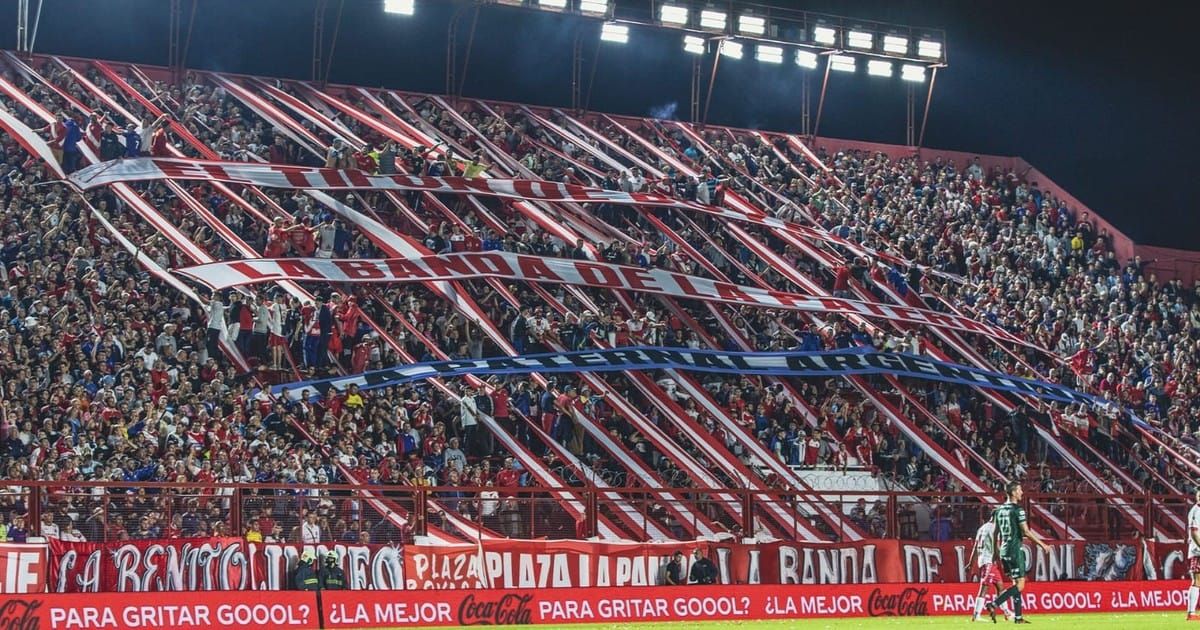
After some stress around the Uber and the ticket window potentially closing before we made it La Paternal (the BA neighborhood where Argentinos Juniors is based) we arrived a Estadio Diego Armando Maradona and made our way to our seats.
Apologies for the dirty camera. I think you get the vibe.
Estadio Diego Armando Maradona is a no-frills concrete edifice with one end currently closed for reasons that aren't entirely clear. As you might imagine, none of that matters too much for a community club that is as much a deeply precious exhibition of personal identity as it is a mechanism for spending the limited disposable income the people of La Paternal might have for entertainment.
It's one thing to understand intellectually how fandom for the sport I have centered my life around differs from place to place; it's another thing entirely to see it in person.
What we see on TV (and I can't admit to having watched much Argentine or South American soccer recently—it seems those competitions are mostly relegated to niche streamers and soccer-specific services that yours truly can't justify on top the six or so I already pay for) is a filtered version of something that is truly emotional when experienced live. It didn't matter that I'd gone nearly 47 years without a single synapse firing on the subject of Argentinos Juniors before I entered that stadium; by the time the game kicked off (and we arrived maybe 5 minutes ahead of kickoff, hence my railing-obstructed seat) I was fully invested in Los Bichos taking down Tigre and continuing what has been a stellar start of the Clausura campaign.
They did, by the way, by a 2-1 scoreline in a game that included three stellar goals and a controversial penalty for Tigre that Argentinos Juniors keeper Gonzalo Siri Payer saved.
As an American soccer booster, someone who cares desperately about the progress of the game in the United States and can't help be see every element of the sport here through the prism of progress, I left Buenos Aires thinking a lot about the differences between what I saw at that match (featuring a pair of small clubs) and how fans and supporters interact with soccer in America.
Let me be clear: I'm not comparing American soccer fandom to fandom in Argentina, nor am I suggested Argentine-style fandom is something to aspire to as an American soccer community. I don't need to tell you that for all of the good that comes with the passion Argentine fans have for the sport in their country, there's a mountain of bad. I reject the idea that the way Argentines support their teams is "better", objectively, than the way Americans support theirs.
But the tangible tension that frames any game in Argentina speaks to the place the sport holds in the national and local identities of the people of Argentina and helps explain why the country will remain a power in global football no matter where its league ranks or how much money it can throw around.
What I saw was a culture fully invested in its version of the sport and its local connections to its clubs that doesn't need the Liga Profesional to challenge Europe's Big Five, doesn't covet state-of-the-art stadium, and doesn't need outside validation.
No one in Argentina gives a shit what Europeans think of their league or their clubs—and while that might sometimes be expressed as an ugly xenophobia (I'm not trying to whitewash the ugly parts of Argentina), I think that's something we as Americans can aspire to.
Argentina's long-standing soccer history is the main driver of that inherent confidence, of course. One of the reasons we shouldn't bother with comparisons between the flavor of American soccer support and that of a place like Argentina's is that there's really no competing with generational connections to clubs like the ones Argentinians passed from parent to child.
One day we'll get there. Even when we do, I don't expect our supporters to sound like Argentine supporters. Or English supporters. Or Mexican supporters. Nor show that be the goal. We have to stop worrying about whether what we're building now "measures up" to another culture in another place with a century or more of incubation away from the constant visual reminders that other people have been doing it longer and therefore will always imagine they're doing to "better."
I don't know how to make up for the gap of intensity when it comes to maxing out what American soccer can deliver in terms of talent. My guess is that for the rest of my time on this planet American soccer will depend mostly on a few geographical pockets and a strong dose of luck to make players good enough to thrive in the best 20 clubs in the world (and by extension, help push the USMNT into higher and higher tiers).
I hope that we lack in day-to-day desperate passion we can make up for with state-of-the-art facilities and high-level coaching.
My visit to Argentina and my taste of soccer there proved to be an interesting point of contrast with a trip I took just a few days after my return from South America. As much as I enjoyed that trip and found it professionally rewarding, it landed as a stark reminder that there's little value in self-flagellating over the differences between American soccer fandom and that of places like Argentina.
As part of our tour of rising American soccer cultures for Morning Kickaround (LIKE! SUBSCRIBE!) I spent a few days in Fort Wayne, Indiana, home of first-year USL League One club Fort Wayne FC.
Fort Wayne is the hometown of DeMarcus Beasley (minority owner of FWFC) and a place with a couple of beloved minor league sports franchises. Soccer is certainly a thing in that part of Indiana, especially in the youth ranks, but like so many other places in America the game struggles to be taken seriously as a professional endeavor.
After a few years in the amateur ranks of USL2, Fort Wayne has moved up to League One and launched in a brand new, 9,200-seat stadium backed by majority owner Mark Music. Music built the stadium with private financing and sees the building as a home for the team and a revenue stream to make that business sustainable. He's taking a clear-eyed commercial approach to the endeavor that (I hope) will stand the club in good stead and prevent it from going the way of so many other professional American soccer clubs.
On a related note, Westchester SC and Corpus Christi FC of USL League One will not return for 2028 according to Backheel. Another one...er, two...bit the dust.
Music's approach won't make him a lot of friends among the American soccer purists and he expressed to me that he's a little wary of the USL's big pro/rel plans, but I see necessity of it. If the alternative is no team in Fort Wayne or a team that lasts a year or two before flaming out and dropping off the map, I prefer a revenue-focused approach that works towards a sustainability at the short-term expenses of treating the team and its league success as paramount.
Music certainly understands he has work to do to capture the attention of people in the Fort Wayne area so as to fill up his stadium in year two. After our live pregame show (embedded below, have a watch), we stayed for Fort Wayne's season finale against visiting AC Boise with a playoff spot on the line for the local side.
Somewhere between 3,000 and 4,000 fans showed up at Ruoff Mortgage Stadium, with a healthy portion of that number consisting of families with kids. Bounce houses and play areas sit behind the massive video board to give extra entertainment options for those bringing out their little ones. The atmosphere, even in the not-full supporters end, felt more like a minor league baseball game than a pressure-packed, do-or-die, playoff-like game for a independent team engaged in the world's most popular and passion-inspiring sport.
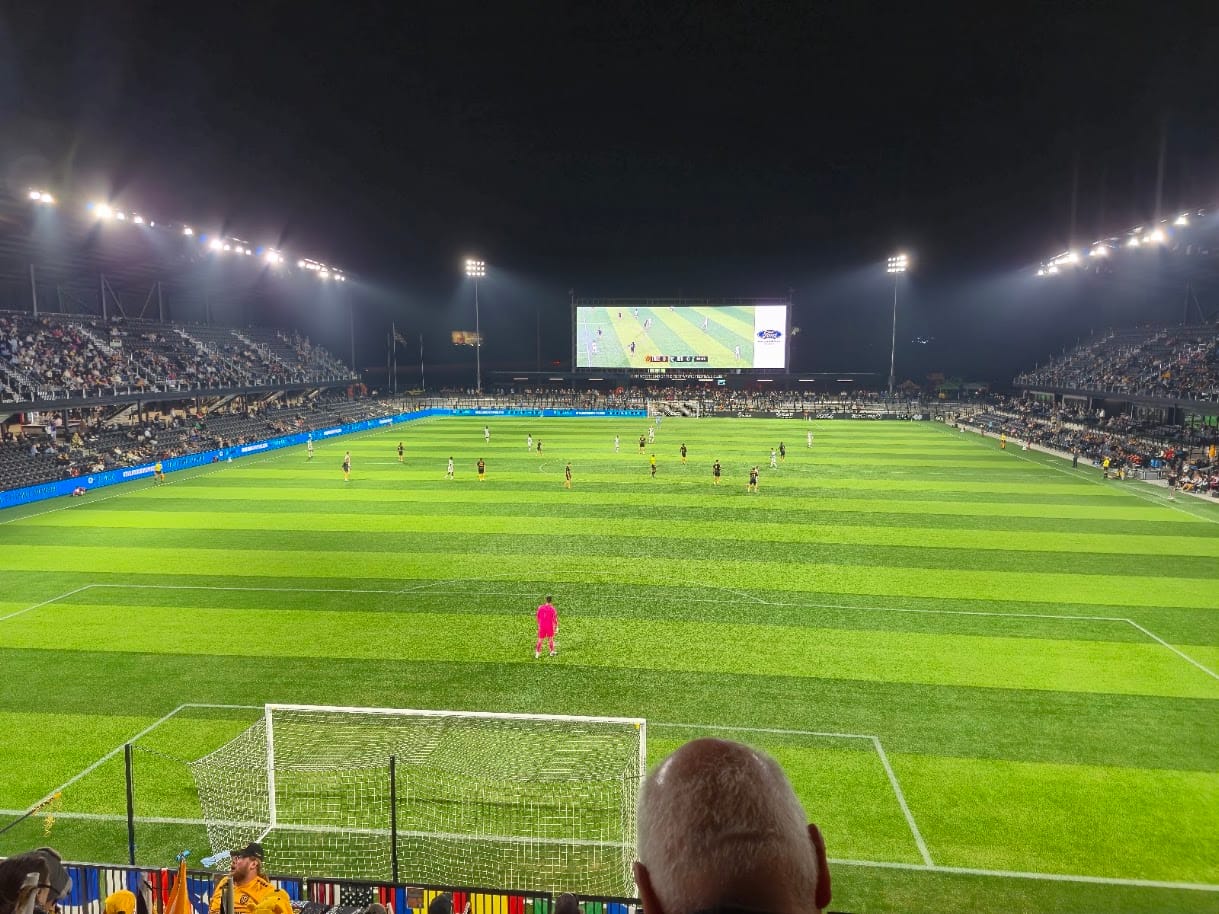
And that's okay. For Fort Wayne, like for most of the American soccer landscape, this is just the start. We can't get where we want to go—whether that's to a "like Argentina" place or anywhere else that means soccer is the massive, culture-consuming thing some of us might wish it to be—if we're not taking the those small first steps.
Here's the show from Fort Wayne. Have a watch.
If you're reading this before 9 PM ET on Thursday, October 29, come by the live edition of The Best Soccer Show happening tonight. I'll be talking about the MLS playoff race, Americans abroad, and lots more with Jonathan Tannenwald.
If you're reading this after the live show happens, watch it back on YouTube or find the podcast version wherever you get your podcasts.
We just passed 15 years of The Best Soccer Show and I'd like to get to 20. I need your support to make that happen.